


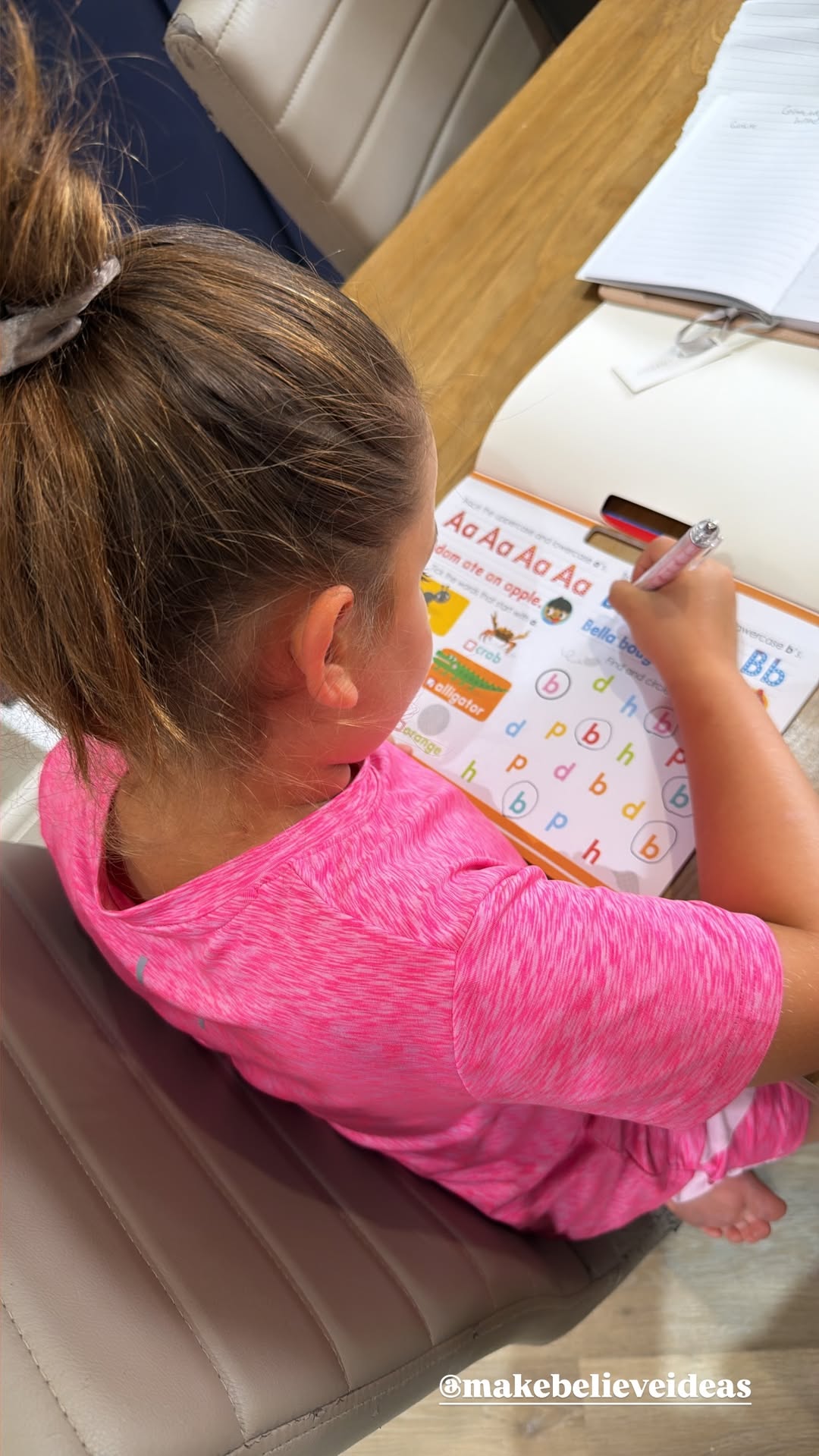

"Just five more minutes of playing." "I'll do it after tea." "I don't have any homework." Sound familiar? Homework time can turn even the calmest evening into a negotiation, and you're far from the only parent who dreads it. The good news is that a homework routine for kids doesn't need to be complicated to work, it just needs to be consistent.
Here's how to help kids with homework in a way that's calmer for everyone, plus a few learning tools that make practising key skills feel a little less like a chore.
Why a routine makes such a difference
Children thrive on predictability, and homework is no exception. When homework happens at a different time, in a different place, with different rules every day, it's much easier for it to become a fight. A steady homework schedule removes the guesswork: everyone knows when it happens, where it happens, and what's expected, which means less energy spent negotiating and more spent actually getting it done.
Building a homework routine that sticks
1. Pick a consistent time
Some children do best diving straight in after school while they're still in "learning mode." Others need to decompress first with a snack and some downtime. There's no universally right answer, but whichever you choose, try to keep it consistent so homework becomes an expected part of the day rather than a surprise.
2. Create a dedicated spot
It doesn't need to be a home office, a cleared corner of the kitchen table works perfectly well. What matters is that it's the same spot each time, reasonably free of distractions, and stocked with the basics: pencils, paper, a ruler, and anything else your child regularly needs.
3. Break it into chunks
Long stretches of concentration are hard for young children. Short, focused bursts, ten to twenty minutes depending on age, with a quick break in between, tend to work far better than expecting a child to sit still for an hour.
4. Keep screens cut of the way
It's tempting to let a tablet or the TV run quietly in the background, but even low-level screen noise can make it harder for children to focus. Save screen time as something to look forward to once homework is done.
5. Let them take the lead where possible
It's tempting to hover, but children build confidence and independence when they're allowed to have a go before you step in. Stay nearby to help if they get stuck, but try to resist correcting every small mistake as they go.
6. Praise the effort, not just the result
Focusing on how hard your child worked, rather than whether every answer was correct, helps build resilience and makes them more willing to tackle tricky homework next time. A simple "you really stuck with that one" goes a long way.
7. Know when to stop
If homework is dragging on well past its usual length and frustration is building on both sides, it's usually better to take a break and come back to it, or leave a note for the teacher, than to push through and risk an upsetting end to the evening.
Tools that make practice feel like play
For younger children still building the foundations, write-and-wipe activities are a brilliant way to practice letters, numbers, and early skills without the pressure of getting it "right" first time; mistakes wipe away in seconds, so there's no fear of making a mess of the page.
Our Mini IQ range is perfect for this. The Write-and-Wipe books cover everything from learning to write and counting to getting ready for starting school, and each page can be practiced again and again with the included pen. For a bit of independent homework-style practice, the Learning Pads offer preschool and Year One-level activities that feel more like a fun workbook than formal schoolwork.
Once your child is old enough to be jotting down their own spellings or reading notes, a proper notebook of their own can help too. Our Cuddly Lined Notebooks give them 144 lined pages behind a soft, huggable animal cover, which somehow makes writing practice feel a lot less like a chore.
When homework still doesn't go to plan
Some evenings just won't run smoothly, and that's completely normal. Tiredness, a tricky day at school, or a subject your child finds genuinely hard can all throw the routine off course. Rather than aiming for a perfect homework time every single night, focus on keeping the routine steady overall; the odd rough evening won't undo the good habits you're building.
Frequently asked questions
What is a good homework routine for kids? A consistent time, a dedicated distraction-free space, and short focused bursts of ten to twenty minutes work well for most children. Keeping the routine the same each day helps homework feel expected rather than a surprise.
How can I help my child focus on homework? Remove background distractions like the TV, break the work into short chunks with breaks in between, and let your child take the lead with you nearby to help rather than hovering over every step.
What should I do if my child refuses to do homework? Try to understand what's behind the resistance, tiredness, difficulty, or simply wanting to play, before pushing through. A short break, a snack, or splitting the work into smaller pieces can help. If refusal is a regular pattern, it's worth mentioning to their teacher.
The Takeaway
A homework routine for kids doesn't need to be rigid or perfect to work, it just needs to be consistent enough that everyone knows what to expect. Pick a time, a spot, and a rhythm that suits your family, and give it time to bed in before deciding whether it's working.
Products from the article

Mini iQ Write-and-Wipe Learn to Write


Mini iQ Write-and-Wipe Get Ready for Starting School