


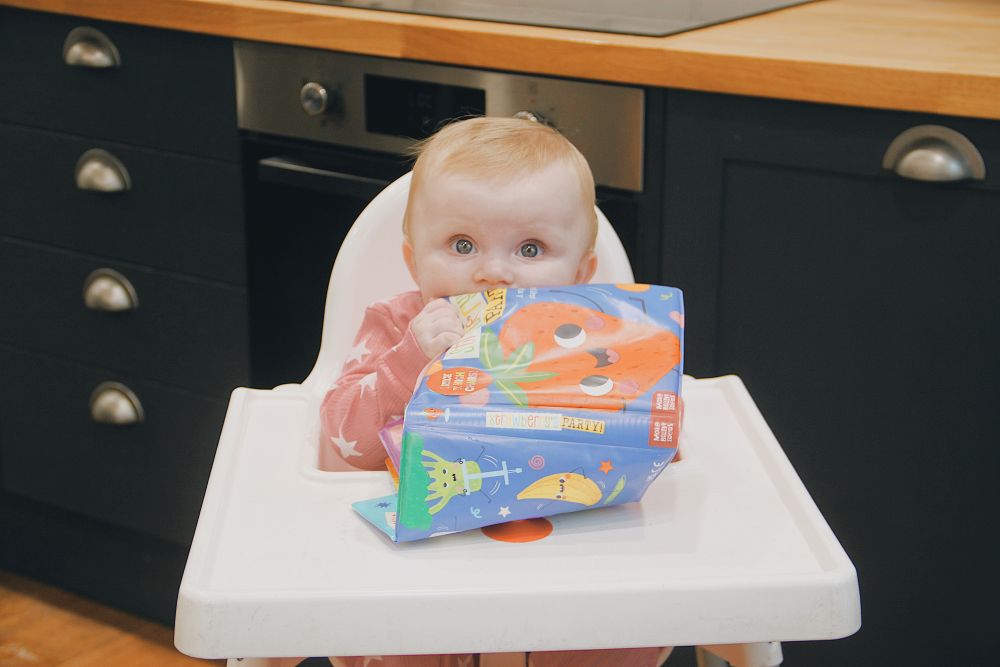

That first spoonful (or fistful) of food is a genuinely exciting milestone, but it's easy to feel overwhelmed by all the advice out there. The truth is, weaning doesn't need a strict plan to go well. A little patience, a lot of mess, and a few simple habits will get you and your baby through it just fine.
Here are our best weaning tips for starting solid foods with less stress, plus a few books that turn mealtime exploration into playtime.
When to start weaning
Most babies are ready to start solid foods at around 6 months, when they can sit up with support, have good head control, and show real interest in food. Every baby is different though, so it's always worth chatting to your health visitor or GP about the right time and approach for your little one, especially if you have any questions about specific foods, allergies, or portion sizes.
Weaning tips that actually help
1. Start slow and follow their lead
There's no need to rush. A few small tastes a day is plenty to begin with, and it's completely normal for early "meals" to be more about exploring than eating. Let your baby set the pace rather than aiming for a certain amount eaten.
2. Expect (and embrace) the mess
Food ends up everywhere in the early weeks; in hair, up walls, occasionally in actual mouths. A splash mat and a bib that covers everything will save your sanity, but try not to fight the mess itself. Squishing, smearing, and dropping food is how babies learn about texture, and it's all part of the process.
3. Offer variety early, even if it comes back out
Introducing a range of flavours and textures early on can help babies become more open to different foods later. A face of pure disgust doesn't necessarily mean dislike, it often just means "new." Offering a food several times, on different days, gives them a proper chance to get used to it.
4. Keep mealtimes calm and unhurried
A relaxed, unrushed mealtime helps babies associate food with something enjoyable rather than something stressful. Sitting down together where you can, even just for a few minutes, makes a bigger difference than the food itself in the early days.
5. Stick with a rejected food
If a food gets refused, it's rarely gone for good. Babies' tastes shift constantly, and a vegetable turned down on Monday might be happily eaten by Friday. Keep offering the foods you'd like them to enjoy, without pressure, and revisit them regularly.
6. Make food part of play, not just meals
Touching, naming, and exploring food outside of mealtimes, through play, books, or pretend cooking, helps babies build a positive, curious relationship with food rather than seeing it purely as something to be eaten (or refused).
7. Get the whole family involved
Babies pick up on what's happening around them at the table. Eating together as a family, even informally, shows them that mealtimes are social and enjoyable, and it's a great way to keep everyone's routine simple rather than cooking separately for everyone.
Sensory play beyond the highchair
Weaning is as much about exploring food with the senses as it is about eating it, and the right books can help extend that curiosity beyond mealtimes. Our Never Touch a Hungry Hippo! is a lovely one to reach for: a touch-and-feel board book with silicone textures on every page and a food-themed, rhyming story that babies (and the grown-ups reading it) genuinely enjoy.
For building early food vocabulary, the 300 First Words Sound Book is great for naming foods alongside animals and everyday objects, with sounds to press and hear again and again, exactly the kind of repetition that helps new words stick. And once your little one is a bit older and into imaginative play, My First Busy Shop turns pretend food shopping into a noisy, hands-on game that naturally builds on the food talk you've already started at mealtimes.
When things don't go to plan
Some days weaning goes brilliantly, and some days your baby wants nothing to do with the spoon, the food, or the highchair at all. That's completely normal. Appetite and interest naturally ebb and flow, especially around teething, illness, or big developmental leaps. Rather than worrying about any single meal, look at the pattern over a week or two, and don't hesitate to check in with your health visitor if you have ongoing concerns.
Frequently asked questions
How do I know if my baby is ready to start weaning? Look for signs like sitting up with support, good head and neck control, and clear interest in food or watching others eat. Around 6 months is the typical starting point for most babies, but your health visitor can advise on timing for your individual baby.
Should I do purees or baby-led weaning? Both approaches can work well, and many families end up mixing the two. What matters most is offering a variety of textures and flavours and following your baby's cues, rather than sticking rigidly to one method.
Is it normal for my baby to refuse most foods at first? Yes, completely. Early weaning is often more about exploring than eating, and refusal is common as babies get used to new tastes and textures. Keep offering foods without pressure, and most babies come around with time and repetition.
The takeaway
Weaning tends to go more smoothly when you let go of the idea of doing it "perfectly." Follow your baby's lead, expect a fair bit of mess, and keep mealtimes calm and low-pressure, the rest tends to fall into place. Explore our full range of sensory books and books for 0-2 years to find more ways to extend the fun beyond the highchair.